Pages

Share This

Deepseek https://www.deepseek.com/./深度求索 DeepSeek | 深度求索
Showing posts with label EMALIN ZALANI. Show all posts

Wednesday, September 2, 2026

From a stroke survivor to offering others hope after stroke


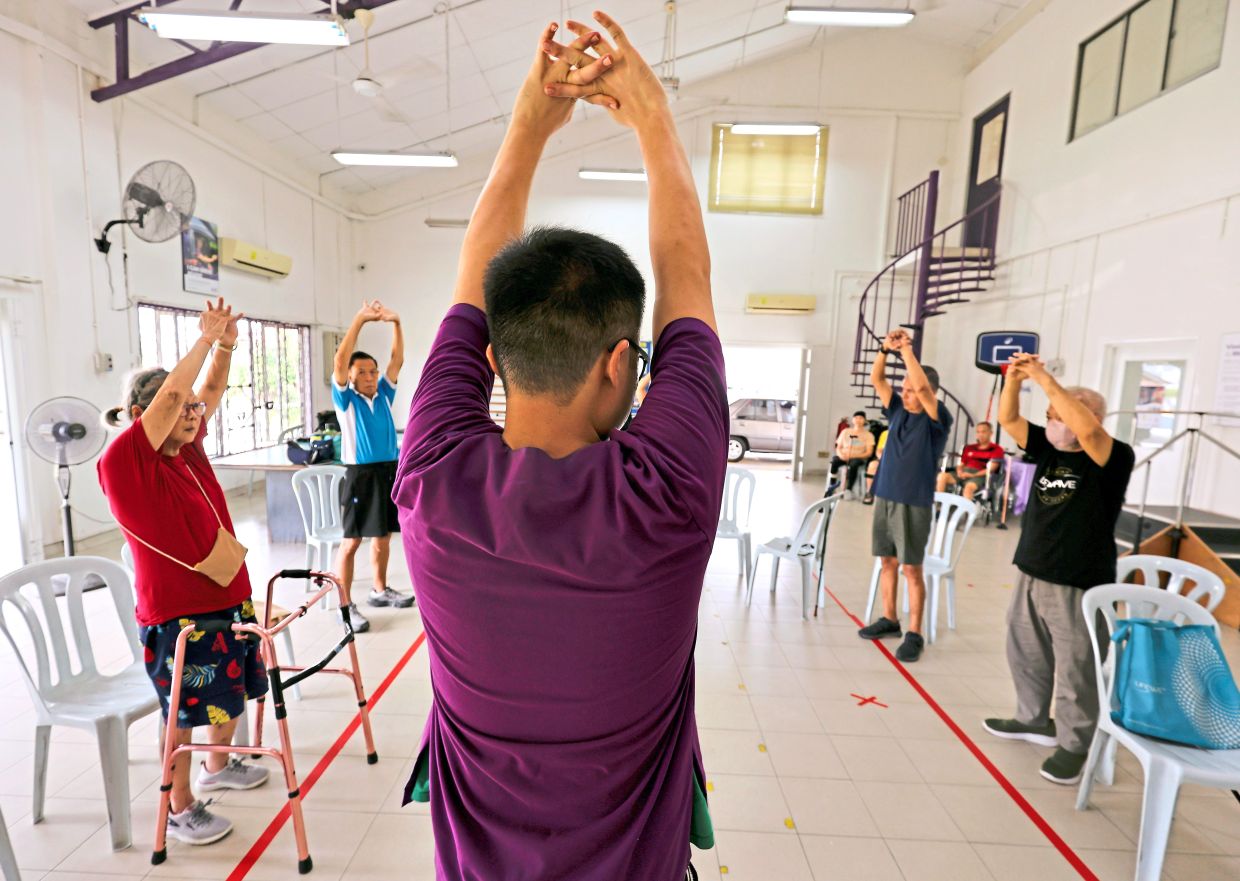
A group therapy session at Nasam’s first centre in Petaling Jaya, where stroke survivors exercise together in groups based on their functional levels, encouraging one another throughout their recovery.

A group therapy session at Nasam’s first centre in Petaling Jaya, where stroke survivors exercise together in groups based on their functional levels, encouraging one another throughout their recovery.
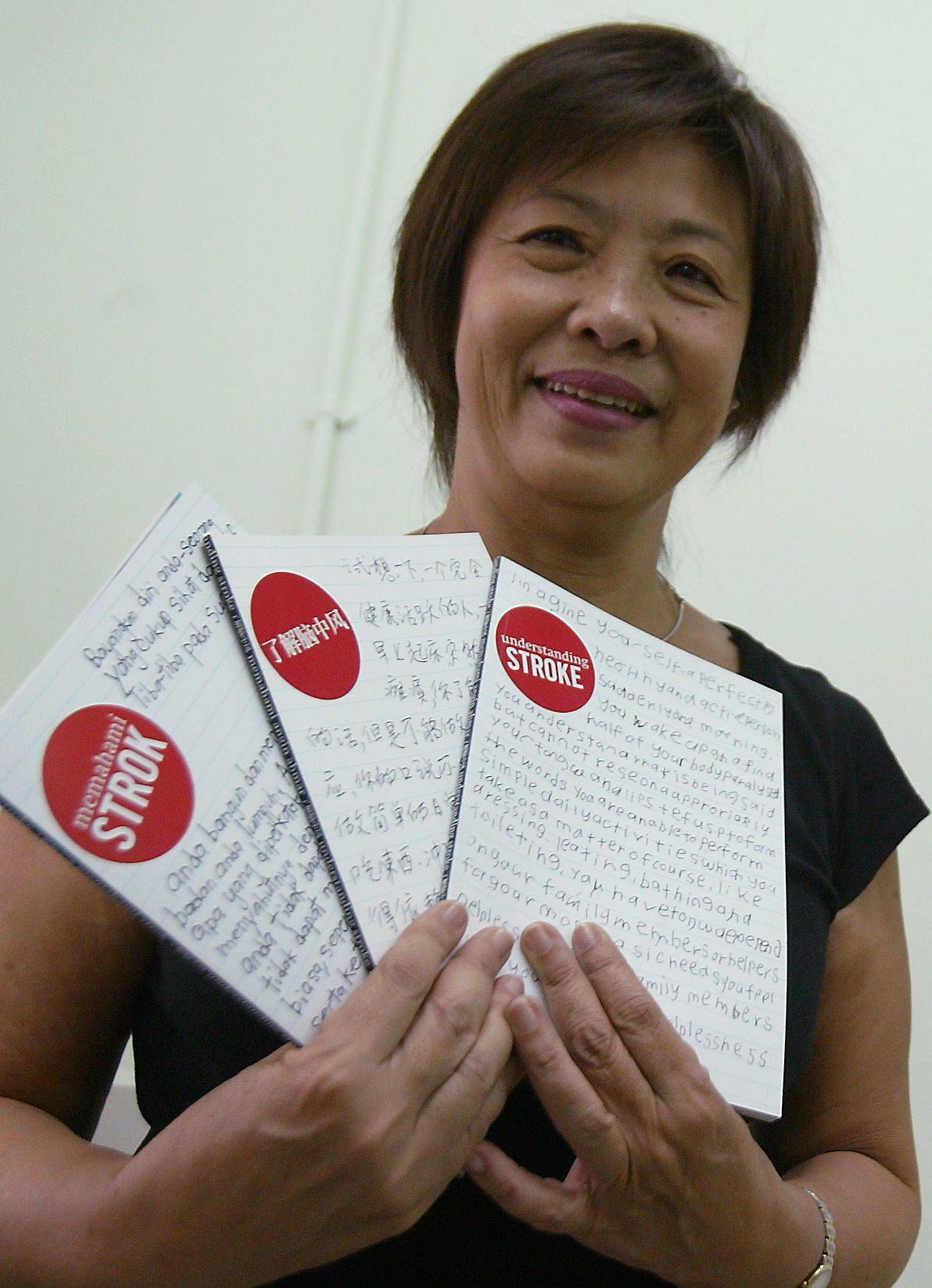
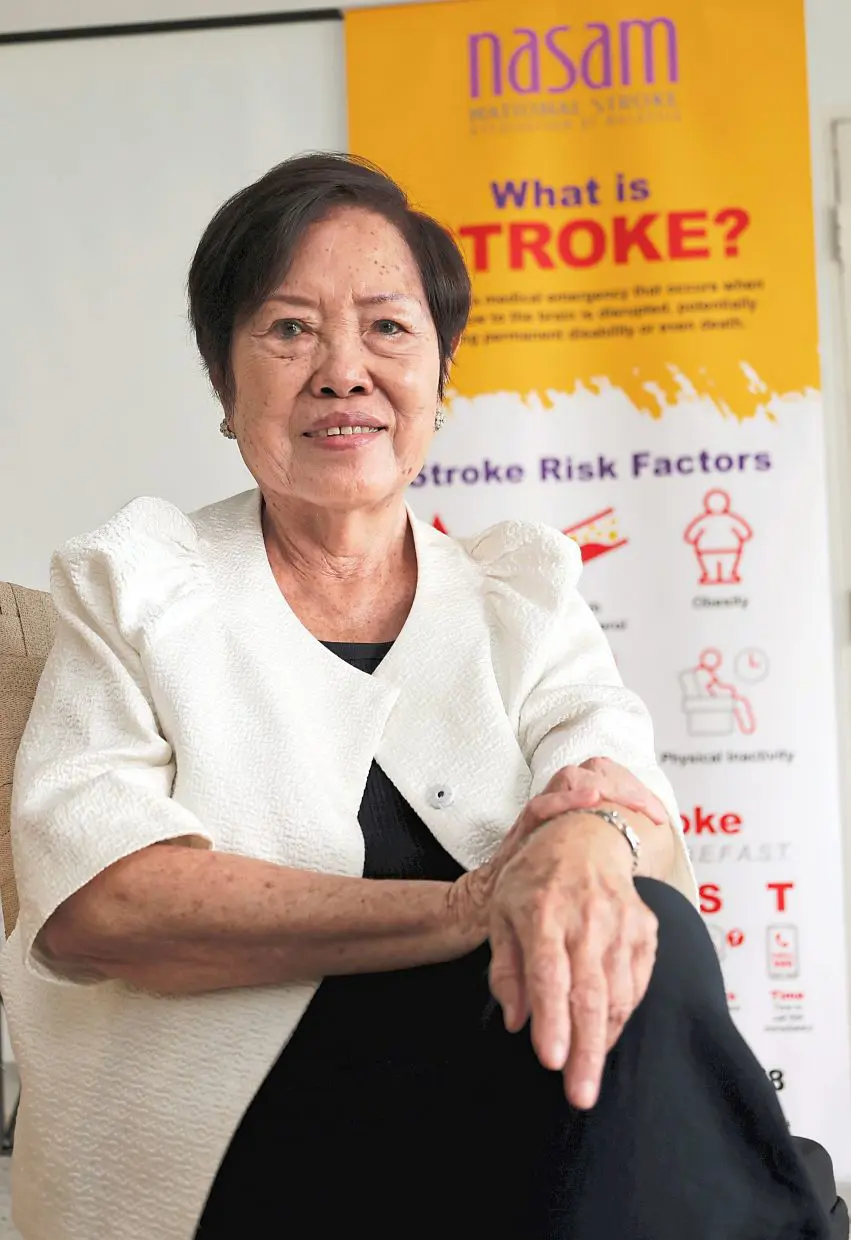
Starting from a stroke survivor support group, Yeo founded Nasam to help provide physiotherapy, as well as mental and emotional support, to these survivors.

Nearly four decades ago, Janet Yeo woke up and got ready for work as usual.

At 44, she was running two advertising businesses.

“I woke up one morning and then I had an evolving stroke.

“One of my hands couldn’t take commands.

“But at that moment, I could still walk and talk,” she shares.

Unaware that she was having a stroke, Yeo continued with her plans for the day, including an interview and a visit to the hairdresser before returning to her office.

“I didn’t realise that I was having a stroke because I didn’t know the signs and symptoms of a stroke,” she says.

But as the day progressed, her condition worsened.

Her right hand became immobile, and she eventually sought medical attention at a private hospital in Petaling Jaya, Selangor.

ALSO READ: Rush the stroke victim to the hospital, not the clinic!

There, doctors told her she had suffered an ischaemic stroke.

This type of stroke occurs when a blood clot blocks blood flow to part of the brain.

Yeo spent the next month and a half in the hospital, eventually becoming completely paralysed on her right side and losing the ability to speak normally.

The will to recover

During that time, she fell into a deep depression.

“When I was in the hospital, I wanted to die; I was very depressed,” Yeo recalls.

ALSO READ: Watch out for depression after a stroke

Prayer, along with her family, gave her a reason to keep going.

“I decided that I want to live because I have my children and my parents,” she shares.

Paralysed on one side, Yeo struggled with everyday tasks.

She could not read the newspaper nor speak normally, while her affected leg felt so heavy that she had to drag it along.

“At one point, I felt like chopping off this leg because it was so heavy,” she says, adding that it was also painful.

A visit from her staff gave her another reason to keep going.

They came to the hospital and whispered: “Boss, you come back to work because we are like orphans without you.”

She broke down in tears.

“That was the motivation I got from my office, from my staff – that I have to get well.”

The experience taught Yeo that stroke survivors need more than medical treatment.

“They need people to inspire, motivate and show them there is hope,” she says.

ALSO READ: This doctor helped patients recover from stroke, then had one himself

Seeking treatment abroad

In 1989, stroke rehabilitation in Malaysia was still relatively unfamiliar.

There was little information available to stroke survivors, and Yeo knew little about the condition herself.

“That year, there was no literature on stroke,” she says.

“There was no awareness of stroke – I didn’t know anything about stroke.”

Determined to learn more, she travelled to Singapore, where Mount Elizabeth Hospital had just established a stroke-specific rehabilitation unit.

What she saw there changed her understanding of stroke rehabilitation.

Rather than focusing solely on physical therapy, the programme taught stroke survivors how to manage everyday activities and regain their independence.

“They show you how to go to the bathroom.

“They teach you how to use two hands to brush your teeth,” she recalls.

Even mealtimes became part of rehabilitation, with simple adaptations such as wrapping a sponge around a spoon handle to make it easier to grip.

Yeo also learnt how early rehabilitation could help prevent complications such as foot drop.

At the hospital, staff would prop up the affected foot with a pillow.

“If the hospital doesn’t do that for you on the first day, you’ll have a drop foot, which I have,” she says.

Today, Yeo cannot lift her affected foot and has to wear a brace to help raise it.

Her rehabilitation journey continued beyond Singapore.

She spent another two months undergoing rehabilitation in the United States before travelling to Beijing to explore traditional Chinese medicine.

Despite still having difficulty speaking and walking, Yeo returned to work about a year after her stroke.

She went on to build four more businesses, while raising two children and caring for her mother, who had cancer.

“I lived my life,” she says.

But she knew she had been fortunate.

Her company provided health coverage, while insurance helped cover her rehabilitation.

She had access to physiotherapy, acupuncture, gym training and rehabilitation overseas – opportunities many stroke survivors do not have.

“Then I thought to myself, for someone without this access, how do they survive from a stroke?” she says.

That question became a mission.

ALSO READ: Stroke: Timing and rehabilitation critical to regain lost function

Treating the person

A group therapy session at Nasam’s first centre in Petaling Jaya, where stroke survivors exercise together in groups based on their functional levels, encouraging one another throughout their recovery.

The idea of starting her own stroke support group was first voiced in a newspaper article.

A year after Yeo’s stroke, a journalist who had initially interviewed her contacted her again to see how far she had progressed.

That was when she expressed her desire to start a stroke support group.

A few years later, she began bringing stroke teams and survivors together at her office.

As the group grew, survivors asked her to provide physiotherapy.

The first rehabilitation space was not a hospital or a clinic; it was Yeo’s garage.

“We would take all the cars out and have the physio,” she recalls.

She hired a Malaysian physiotherapist, and the initiative operated from her office and home for four years.

It later moved next door, when her sister-in-law bought a house that was custom-built as a centre for the fledging organisation now officially registered as the National Stroke Association of Malaysia (Nasam).

It has now been operating there for 30 years.

But Yeo wanted Nasam to offer more than conventional rehabilitation.

She developed what she called a “holistic programme”, focusing not only on physical recovery, but also on the emotional and social needs of stroke survivors.

“If you go to a hospital, they treat you just like an arm and a leg.

“One hour, finish, bye-bye. See you next week,” she says.

“But here, we look at it from head to toe, because you are still the same person.

“You are still a mother, a father. You still have children. You’re still holistic.”

For Yeo, stroke recovery was also a mental journey.

She says survivors can experience shock and denial before potentially falling into depression.

Without adequate support, some survivors can become withdrawn or depressed.

“Once they are in depression, it’s very hard to get them out.”

Yeo also saw how financial circumstances could affect access to rehabilitation.

“A lot of poorer people don’t have insurance and can’t get physiotherapy.

“They go into depression and just accept it.”

At Nasam, the approach extends beyond therapy, with walks, outings, games and karaoke sessions designed to keep survivors engaged.

“If they don’t come to us, they stay in their room – four walls, TV screen – they give up.”

At the heart of it was a belief she wants every stroke survivor to hold on to: “There is life after stroke.”

ALSO READ: Learning to walk again after a stroke... at 41

Keeping the mission alive

Keeping Nasam going has brought its own challenges

One of Yeo’s biggest struggles has been finding and retaining qualified physiotherapists.

When she started the non-governmental organisation, many physiotherapists in Malaysia were foreign-trained and too expensive for her to hire.

Unable to compete with private sector salaries, Janet travelled to Mumbai, India, to recruit five physiotherapists.

“There were 30 people lined up to be interviewed, so I selected five,” she says.

As more hospitals established stroke rehabilitation units, competition for experienced physiotherapists increased.

“My biggest problem is to get good-quality physios who will stay and work for the small pay that I get, because I cannot compete with hospitals,” she says.

Some physiotherapists eventually leave to provide private home-based treatment, taking some stroke survivors with them.

“So we lose our physios, we lose some of our ‘strokees’, but we have to carry on.

“We’re very lucky that people who stay today, they are with us because they have love and passion,” she says.

For Yeo, the reward is seeing stroke survivors regain their independence.

“Satisfaction is when you see someone come in with a wheelchair or using a stick, but after a few months, they can walk out by themselves.”

Expanding the reach

Nasam was Malaysia’s first stroke-specific organisation, and today, operates six centres in Petaling Jaya, Ampang, Ipoh, Johor Bahru, Kuantan and Kota Kinabalu.

Yeo hopes to expand Nasam’s reach to more areas, as stroke survivors have requested centres closer to their homes.

As the organisation marks its 30th anniversary on Sept 5 (2026), it will bring stroke survivors together for an evening of singing, dancing and celebration.

Yeo, who is scheduled to undergo leg surgery before the anniversary, is looking forward to joining them.

“I want to dance during the anniversary and enjoy with the ‘strokees’,” she says with a laugh.

For more information on how to support Nasam, click here.


Monday, March 23, 2026

Optimising stroke care through the Angels initiative


Stroke remains one of Malaysia’s most pressing health challenges, consistently ranking among the country’s top causes of death.

Aside from the fatality rate, stroke often leaves survivors with lifelong disabilities, affecting not only individuals, but entire families.

In response, the Acute Networks Striving for Excellence in Stroke (Angels) initiative aims to help strengthen stroke care nationwide.

Launched in 2016 by German multinational pharmaceutical company Boehringer Ingelheim and endorsed by the European Stroke Organisation (ESO) and the World Stroke Organisation (WSO), the Angels initiative helps hospitals worldwide become “stroke-ready”. 

Its goal is straightforward: to improve stroke treatment by providing hospitals with the tools, resources and support necessary to ensure timely, effective care.

By enhancing hospital preparedness and increasing stroke awareness, the initiative helps healthcare teams deliver faster and more effective treatment.

For Sarawak General Hospital (SGH) consultant neurologist and stroke care leader Dr Law Wan Chung, the initiative arrived at a critical time.

“Stroke has consistently been among the top three causes of death in Malaysia over the past 10 to 15 years,” he explains.

“The Angels initiative is very timely for Malaysia, as we urgently need to reduce both mortality and morbidity related to stroke.”

Every minute matters

There are two main types of strokes: ischaemic, caused by a blood clot blocking a vessel in the brain, and haemorrhagic, caused by ruptured blood vessels that result in bleeding.

The most common type of stroke in Malaysia is ischaemic.

“Without oxygen-rich blood, brain cells begin to die within minutes,” Dr Law explains.

“One minute lost means 1.9 million nerve cells are lost.

“Every 15-minute delay significantly reduces the chance of patient recovery.”

He adds: “Treatment must be delivered within four-and-a-half hours of symptom onset.

“This means patients need to reach the hospital within that window, undergo examination, and most importantly, receive brain imaging to determine whether they are eligible for treatment.”

Yet, many patients arrive too late.

Data from the National Stroke Registry shows that only about 35% reach the hospital within that window.

“On average, patients take around seven hours to seek medical care – far beyond the ideal time frame,” Dr Law notes.

If patients arrive early and meet the criteria, doctors will administer intravenous clot-dissolving medication to break down the blockage and restore blood flow.

However, for patients with large vessel occlusion, where a major artery is blocked, medication alone may not be sufficient.

In such cases, a wire may be inserted through a procedure called mechanical thrombectomy – a minimally-invasive method to physically remove the clot.

Together, these two are the most effective treatments for ischaemic stroke patients, and form the core focus of the Angels initiative in Malaysia and globally.

Becoming stroke-ready

Before participating hospitals are chosen for the Angels initiative, they must first meet essential criteria. 

Promoting public awareness of stroke and the importance of seeking treatment quickly is one of the requirements of the Angels initiative. Photos: Filepic

This includes having a specialist doctor trained in stroke care and access to neuroimaging facilities such as a CT (computed tomography) scanner or MRI (magnetic resonance imaging).

Once identified, hospitals receive on-site training from the Angels team to establish clear workflows and treatment criteria.

This starts from public awareness and extends to emergency medical services (EMS), i.e. ambulance services.

EMS personnel are trained to recognise stroke symptoms, prioritise patients within the treatment window and alert hospitals in advance.

Upon arrival, whether by ambulance or walk-in, the emergency department rapidly assesses patients and sends them for urgent brain imaging in radiology before a neurologist’s evaluation.

Public awareness also plays a crucial role.

Healthcare providers promote the BE FAST mnemonic to help people recognise warning signs:

  • B: Balance problems
  • E: Eye or vision disturbance
  • F: Facial drooping
  • A: Arm or leg weakness
  • S: Speech difficulties (slurred or confused speech)
  • T: Time, emphasising the urgency of seeking medical help.

“Even one sudden symptom is enough to go to hospital,” Dr Law stresses.

Specific targets

Performance is closely monitored by the Angels team.

Stroke centres are graded gold, platinum or diamond based on key indicators.

These include the total number of stroke patients seen, the minimum number of patients treated over a given period, and the percentage of patients who receive clot-busting treatment.

One critical benchmark is door-to-needle time – i.e. the interval between hospital arrival and treatment – with an international target of 60 minutes.

“At SGH, our initial door-to-needle time was nearly two hours,” Dr Law says.

“Through systematic auditing, we reduced it to under 60 minutes.”

Another key measure tracks the proportion of eligible patients who receive treatment, ensuring that no suitable patient is missed.

Dr Law stresses that leadership is equally vital and that having a dedicated “stroke champion” to coordinate teams and drive improvement is essential.

With only around 170 practising neurologists nationwide and most large hospitals having only one or two, 24-hour coverage remains challenging.

“We cannot rely only on neurologists,” he says.

“This role may also be taken on by physicians, geriatricians or emergency specialists, depending on the hospital’s resources.

“Everyone must work in sync.”

Currently, SGH has earned 10 Gold Awards for hospital performance and one Diamond Award for ambulance performance.

The awards are assessed every three months, requiring hospitals to consistently maintain performance standards.

Beyond individual hospitals, Kuching has been recognised this year (2026) by the WSO as an Angels Region – a designation awarded to areas where community awareness, EMS partnerships and acute hospital care are optimised to deliver better outcomes for stroke patients.

Achieving this requires hospitals, emergency services, local authorities and public educators to work in concert to provide safe, coordinated care for stroke patients in their communities.

Other areas in Malaysia that have received this recognition include the Barat Daya district in Penang and Taiping in Perak.

Introducing a common framework

When Angels was first introduced in Malaysia, stroke services were limited.

In 2017, only about 34 hospitals provided organised stroke-ready treatment, often on a case-by-case basis.

In fact, SGH had already begun 24/7 hyper-acute stroke care as early as 2015, becoming the first hospital in Malaysia to do so.

“The early years were challenging,” Dr Law recalls.

“There was no established system. Everything had to be built from scratch.”

Over time, workflows were refined and systems strengthened.

“We could see that the model worked.”

In 2017, when the Angels initiative was introduced, SGH was the first in East Malaysia to participate and adopt the international protocols and guidelines.

“It allowed us to monitor, audit and expand services – first across the state, and later, nationwide,” he says.

Rather than operating independently, hospitals could work towards shared targets, fostering collaboration and replacing fragmented efforts with a coordinated, standardised approach.

Today, 47 hospitals under the Health Ministry, six under the Higher Education Ministry and 48 private hospitals nationwide provide hyper-acute stroke services.

In East Malaysia, 22 hospitals participate in the initiative, including 12 in Sarawak.

Reaching rural communities

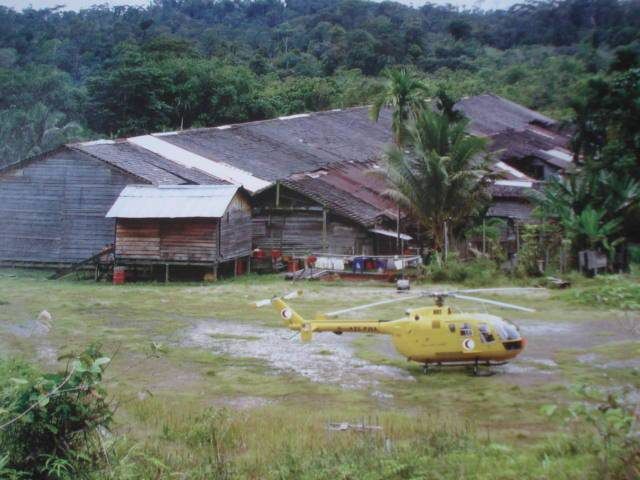
In East Malaysia, geography is often an impediment to getting stroke patients treated quickly, with some needing to be flown to hospitals that have stroke care units.

For patients living near urban centres, access to stroke care is relatively straightforward.

In rural Sarawak, however, geography poses significant challenges.

To address this, an integrated ambulance network was established.

“Patients in smaller district hospitals within the Kuching region – including Bau, Serian and Lundu – can be rapidly transferred,” Dr Law explains.

These cluster hospitals lack neuroimaging equipment, requiring transfer to SGH for such facilities.

“If patients present within the treatment window, ambulances may bypass nearer facilities and transport them directly to SGH to have everything done here, including imaging and treatment,” he says.

Today, most Sarawak hospitals with specialist support and neuroimaging provide hyper-acute stroke care, forming referral networks with smaller facilities.

Mechanical thrombectomy, however, remains limited.

SGH is currently the only centre in Sarawak offering the procedure.

For smaller district hospitals outside Kuching, treatment still relies heavily on medication to dissolve clots.

“Patients from other districts may require air transfer.

“Unlike in Peninsular Malaysia, where ambulances can transport patients over long distances by road, Sarawak’s geography presents challenges, as the state is much larger,” he says.

“Ideally, patients should reach Kuching within six hours, although it may still be considered up to 24 hours after symptom onset.

“Upon arrival, doctors reassess whether brain tissue remains viable before proceeding.”

Dr Law emphasises that the most important message the public needs to understand is that stroke is treatable, and in many cases, reversible.

“The earlier treatment is given, the better the chances of full recovery.”