Pages

Share This

Deepseek https://www.deepseek.com/./深度求索 DeepSeek | 深度求索
Showing posts with label War. Show all posts

Monday, April 13, 2026

America’s war crimes

hid Hussain

While detailing the extensive operation conducted by the US forces to rescue the crew of a fighter jet shot down by Iranian missiles, he seemed uncertain about the endgame in a war that has now entered its sixth week. His contradictory statements on how the war could end has left the world perplexed. After escalating his threat to decimate Iran, he hinted at a “less radicalised” Iranian leadership and a diplomatic solution. He claimed that regime change had already occurred in Iran.

Trump seemed unconcerned that his threat to bomb Iranian infrastructure could constitute a war crime. Earlier, he sparked a political firestorm by posting an expletive-laden warning to Iran and threatening further military escalation if Tehran did not reopen the Strait of Hormuz and agree to a deal on his terms. He also suggested seizing Iran’s oil fields, declaring, “To the victor belong the spoils”, as if he had already won the war.

The madness of the leader at the helm of the world’s most powerful nation seems knows no bounds. He is becoming increasingly dangerous, especially as Iran continues to refuse to capitulate despite the extensive destruction wrought by the US and Israel on its soil.

His delusional claims and mixed messages have left the world anxious. With only a day remaining, at the time of writing, before his deadline, the international community awaited Trump’s next move, particularly since Iran has rejected his ceasefire demands and threatened severe reprisals. The madness of the leader at the helm of the world’s most powerful nation seems knows no bounds. He is becoming increasingly dangerous, especially as Iran continues to refuse to capitulate despite the extensive destruction wrought by the US and Israel on its soil.

Trump’s growing war crimes and his latest threats are ominous. America, in coordination with Israel, has intensified attacks not only on civilian and energy infrastructure but also on educational and research centres. Several university campuses have been bombed. This appears to be part of Trump’s threat to decimate Iran.

According to Iranian authorities, at least 30 universities have been hit by US and Israel since the start of the war. Last week, a US-Israeli strike caused severe destruction at the Sharif University of Technology in Tehran. Widely considered Iran’s best university, it is also ranked among the world’s top universities in the field of civil engineering and artificial intelligence. The iconic institution, which is a symbol of Iran’s modernisation, has produced some world-renowned mathematicians and engineers. Media reports suggest that many laboratories have been destroyed as the campus infrastructure was hit. The US-Israel coalition also bombed the Laser and Plasma Research Institute.

America, in coordination with Israel, has intensified attacks not only on civilian and energy infrastructure but also on educational and research centres. Photo: Reuters


Ignoring international outrage and condemnation, the US and Israel have continued to target academic institutions with an impunity rarely seen in modern history. In addition to striking university campuses, the US-Israel coalition has targeted eminent scientists and scholars. Israeli Prime Minister Benjamin Netanyahu has confirmed reports that Israeli strikes have killed several Iranian nuclear scientists, framing the campaign as part of a larger effort to destroy Iran’s nuclear programme.

Such attacks, aimed at decimating centres of higher learning and the scientific environment, not only violate international law but also constitute war crimes. These actions will perpetuate Israel’s American-backed genocidal war in Gaza and the wanton destruction of Lebanon. On the first day of the war, American missiles struck a school in Iran killing more than 150 girl students. Most concerning is the effort by the Trump administration to frame the conflict with Iran in religious and civilisational terms. Recently, US Defence Secretary Pete Hegseth called for prayers for military victory “in the name of Jesus Christ”.

According to a report in the New York Times, “More than any top American military leader in recent history, Mr Hegseth has framed US military operations [...] as bigger than politics or foreign policy. Often he has imbued these actions with a Christian moral underpinning... .” He also prayed for “overwhelming violence of action against those who deserve no mercy”. 

American troops are reportedly told that the conflict in Iran is aimed at paving the way for the end times and Armageddon. The belief is that Trump “has been anointed by Jesus to light the signal fire in Iran to trigger Armageddon and mark His return to Earth”.

In a recent Pentagon news briefing, Hegseth reportedly stated: “Crazy regimes like Iran, hell-bent on [religious] delusions, cannot have nuclear weapons.” Religion is also employed to justify America’s support for Israel.

Mike Huckabee, American ambassador to Israel, reportedly told prominent commentator Tucker Carlson that it would be “fine” if Israel took “essentially the entire Middle East” because it was promised the land in the Bible. Meanwhile, Israeli Prime Minister Benjamin Netanyahu compared Iran to the Amalekites, seen in Jewish tradition as representing evil.

US President Donald Trump has claimed he could ‘take out Iran in one night’ and has reiterated his threat to bomb the country ‘back to the Stone Ages.’ Photo: AFP


It is extremely dangerous to rationalise an imperialist war of aggression through religious and civilisational rhetoric. Trump’s actions have pushed the region closer to a wider conflagration and have also impacted the global economy. His latest statements have raised fears of further escalation.

The calculated assassinations of senior Iranian political and military leaders have created a serious leadership vacuum, likely to be filled by more radical elements, making any efforts at mediation extremely difficult.

While America and Israel can decimate Iran’s civil and military infrastructure, they cannot force it to capitulate. Iran has hardened its position, given the relentless destruction of its land, complicating any attempts at de-escalation. Trump’s threats of escalation have worsened the situation. We will have to wait and see what he does next.


This article was first published in The Dawn, an ANN partner of The Daily Star, on April 8, 2026.


Zahid Hussain is a Pakistani journalist and author. His Twitter handle is @hidhussain


Saturday, August 3, 2024

U.S. intellectuals speak out against Asia war


TOP INTELLECTUALS IN THE U.S. stood up this week to speak out for China—and demand a stop to the powerful militaristic country’s drive to start an unnecessary war in East Asia.

The White House claim this week that they did not want conflict with China is “Denial and information distortion bordering on propaganda,” said Stephen Roach, Yale University professor and former chief economist at Morgan Stanley. The untrue statement was “classic Cold War posturing”, he said in statement on Twitter on Thursday.

Others agreed. Falsely painting the Chinese as trying to take over the world is bad for everyone, writer David Rothkopf argued in a Daily Beast essay printed today. Why paint China as a threat?

“Why? Why is it such a great threat even though the country has no history of conquest beyond its region in 5,000 years of history and is far from being able or inclined to pose a direct threat of attack to the U.S.?” he asked.

Even the relentlessly hostile Financial Times printed a column by Edward Luce admitting that the current geopolitical tension in the world did not come from China, but from the U.S.

“This week, Xi Jinping went further than before in naming America as the force behind the ‘containment’, ‘encirclement’ and ‘suppression’ of China. Though his rhetoric was provocative, it was not technically wrong,” wrote Luce in a column on Wednesday. Luce, like most FT writers, normally takes a very hostile line against China.

INTELLIGENCE CHIEF WARNING

On the other side, America’s Director of National Intelligence Avril Haines tried to justify the U.S. stance. She said the U.S. was working against China because the giant country is “increasingly challenging the United States economically, technologically, politically, and militarily around the world”.

She said the goal of the Chinese was to “continue efforts to achieve [President] Xi’s vision of making China the preeminent power in East Asia and a major power on the world stage.”

But Rothkopf responded to Haines’ statement by stating the obvious: so? What else would anyone expect?

“Is there something inherently wrong or dangerous about China seeking to challenge the United States economically, technologically, or politically? Isn’t that what all nations do? Don’t we believe in the inherent superiority of our system? Don’t we believe in the benefits of competition? (I thought that was fundamental to America’s national identity and values.)”

He further pointed out that “all nations seek to have sufficient power that they cannot be bullied by global hegemons (and let’s be realistic, we’re the only global hegemon in this conversation at the moment)”.

In other words, China is taking a tougher stance because the strutting, might-is-right stance that the U.S. takes, has forced it to do so.

COLD WAR

While a belligerent U.S. tries to recreate the old script of the Cold War against Russia, there’s a marked difference between the Soviets and the Chinese, Edward Luce pointed out: “China is not exporting revolution.”

The U.S. justified its hostility to the Soviet Union by saying it was spreading communism, but the Chinese are not spreading their system anywhere.

PUBLIC AGREEMENT

There was a strong outbreak of voices on social media agreeing with these points.

Nobody can believe the White House claim that they are not trying to create war, numerous voices said. “We just send warships and war planes to China’s territorial waters in the friendliest of ways,” was the sarcastic response of Alfonso Araujo.

Stephen Roach’s claim that the White House position was “bordering on propaganda” was “too kind”, said Brenda Teese.

“Biden talks about competition, but what he does is zero-sum and hostile behavior,” said Spencer Du. “China has not yet intended to take the U.S. as its enemy but has begun to take the actions of the U.S. as hostile.”

“If the U.S. cannot acknowledge the legitimacy of the P.R.C. to rule China, then the U.S. is essentially agitating for a war,” said Professor Gregory Herczeg this morning.

BUSINESS COMMUNITY HAS A DIFFERENT VIEW

The U.S. political response was markedly different from the point of view of ordinary people and the business community.

There are more than 70,000 U.S. companies operating in China, David Rothkopf pointed out. The two powerful nations are already strongly intertwined in a positive way – so why ruin this?

The justification for hostility against China is crude allegations that the country “destroyed” Hong Kong and “genocided” the Uyghur population of Xinjiang, but neither narrative remotely reflects the more complex reality. Now the U.S. is making use of Taiwan.

TAIWAN JUST AN EXCUSE

“The problem with the current apparent decision to treat China as an enemy and an existential threat is that it can lead to distorted views on certain issues—such as Taiwan,” Rothkopf says.

“Let’s be real for a moment. What really bothers us about China’s rise is that they are quite open about the fact that they want to challenge our influence in the world. We want to be No. 1. We don’t like being challenged,” he wrote.

Luce agreed that America actively looks for excuses to create negativity. “If Taiwan did not exist, would the U.S. and China still be at loggerheads? My hunch is yes,” he wrote.

The American administration is taking an unnecessarily harsh stance against China’s peaceful rise in its neighborhood, Rothkopf argued. “But isn’t it reasonable for China to want such influence?” he asked.

“After all, throughout world history until the start of the industrial revolution, China had the world’s largest economy and it is now resuming that role.”

Source link 

Philippine fishermen and environmental groups oppose US military bases in the Philippines, warning against 'proxy war' dangers

Philippine fishermen and environmental groups gathered in Quezon City for a forum to express their concerns about the risks of the Philippines becoming embroiled in a "proxy war" as a result of US military bases in the country. The gathering coincided with reports of joint maritime exercises between the Philippines ...

Related posts:

Philippine Group Protests US-Filipino War Games!

Maritime claims in the South China Sea

Friday, April 28, 2023

A mediator in Russia's war with Ukraine, China's Xi holds call with Zelenskyy


#Ukraine #Zelensky #Xi Chinese President Xi Jinping spoke to Ukraine's Volodymyr Zelensky by telephone on Wednesday for the first time since Russia's invasion of Ukraine, fulfilling a longstanding goal of Kyiv which had publicly sought such talks for months. Zelensky immediately signalled the importance of the chance to open closer relations with Russia's most powerful friend, naming a former cabinet minister as Ukraine's new ambassador to Beijing. #Ukraine #Xi #Zelensky

We won’t sit by or seek to profit from war, Ukraine leader told

KYIV/BEIJING: Chinese president Xi Jinping spoke to Ukraine’s Volodymyr Zelenskyy by telephone for the first time since Russia’s invasion of Ukraine, fulfilling a longstanding goal of Kyiv which had publicly sought such talks for months.

Zelenskyy immediately signalled the importance of the chance to open closer relations with Russia’s most powerful friend, naming a former cabinet minister as Ukraine’s new ambassador to Beijing.

Describing the hour-long phone call as “long and meaningful”, Zelenskyy tweeted: “I believe that this call, as well as the appointment of Ukraine’s ambassador to China, will give a powerful impetus to the development of our bilateral relations.”

Xi told Zelenskyy that China would send special representatives to Ukraine and hold talks with all parties seeking peace, Chinese state media reported.

Xi, the most powerful world leader to have refrained from denouncing Russia’s invasion, made a state visit to Moscow last month. Since February, he has promoted a 12-point peace plan for Ukraine, greeted sceptically by the West but cautiously welcomed by Kyiv.

China will focus on promoting peace talks, and make efforts for a ceasefire as soon as possible, Xi told Zelenskyy, according to the Chinese state media reports.

“As a permanent member of the UN Security Council and a responsible country, we will neither sit idly by, nor pour oil on fire, still less seek to profit from it,” Xi said.

In a readout of the call on Telegram messenger, Zelenskyy said the two leaders discussed “possible cooperation to establish a just and sustainable peace for Ukraine”.

The White House welcomed the call, which it said it had no advanced knowledge of, but said it was too soon to tell whether it would lead to a peace deal.

“That’s a good thing,” White House national security spokesperson John Kirby said. “Now, whether that’s going to lead to some sort of meaningful peace movement, or plan, I don’t think we know that.”

France also welcomed the call, with President Emmanuel Macron’s office saying the French leader had pushed Xi to hold this call with Zelenskiy during his visit to Beijing this month.

The 14-month war is at a juncture, with Ukraine preparing to launch a counteroffensive in the coming weeks or months following a Russian winter offensive that made only incremental advances despite the bloodiest fighting so far.

There are no peace talks in sight, with Kyiv demanding Russia withdraw its troops and Moscow insisting Ukraine must recognise its claims to have annexed seized territory. 


Beijing's role as peacemaker gains stature


Beijing's role as peacemaker gains stature

Xi, Zelenskyy talk on ties, Ukraine crisis on phone

Chinese President Xi Jinping and Ukrainian President Volodymyr Zelenskyy held a phone call on Wednesday at the invitation of the latter, during which the two leaders exchanged views on China-Ukraine relations and the Ukraine crisis. Chinese analysts said that China is now likely to get more involved on the diplomatic front to contribute to a political settlement of the Ukraine crisis, and the role that China could play has been sincerely welcomed by both Kiev and Moscow, despite some voices from the West, especially the US, that have tried to distort China's mediation efforts. 

Xi says dialogue only viable way out for Ukraine crisis

Chinese President Xi Jinping said on Wednesday that dialogue and negotiations are the only viable way out for the Ukraine crisis, and no one wins a nuclear war.

China's special envoy to Ukraine will play positive role in promoting peace talks: Foreign Ministry

The special representative of the Chinese government to Ukraine will be someone who is familiar with relevant affairs and can play a positive role in promoting peace talks, a Chinese Foreign Ministry spokesperson said on Thursday, one day after Chinese President Xi Jinping and Ukrainian President Volodymyr Zelenskyy talked on the phone discussing bilateral ties and the Ukraine crisis.


Monday, February 25, 2019

2nd Kim-Trump summit in Vietnam deserves more support

https://youtu.be/ofUtSOORUmk
https://youtu.be/_GhgGe7das8
Live: Kim arrives in Vietnam ahead of summit with Trump 第二次特金会 金正恩抵达越南
https://youtu.be/XMTJu1SeLUE North Korea's Kim Jong-un takes train to China - BBC News
https://youtu.be/Zvi4PBdd74Y

Inside train used by Kim Jong-un to travel to China - BBC News
https://youtu.be/_Bcpx6PUpys

Kim Jong-un en route to Vietnam summit by train
https://youtu.be/t4blLDfNrSo

According to media reports, North Korean leader Kim Jong-un left Pyongyang by train for Vietnam on Saturday for his second summit with US President Donald Trump in Hanoi, which reportedly will be held on February 27 and 28.

The upcoming second summit sends positive signals, indicating that Pyongyang and Washington have been moving forward on both denuclearization and permanent peace for the Korean Peninsula since the first summit last June.

Nonetheless, there exist anxieties among certain American and South Korean elites. They worry Trump may make too many concessions and harm Seoul's interests. In their view, the first Kim-Trump summit was a failure and Trump should not repeat the mistake in the upcoming meeting.

North Korea-US relations achieved a major breakthrough since the first summit, providing a new impetus for fundamentally solving the peninsula issue. However, those elites proclaimed that Trump's decision to stop the US-South Korea joint military exercise was a unilateral concession, while North Korea did nothing.

Pyongyang declared it would cease nuclear and missile testing, and dismantle its nuclear test site. According to this logic, did Pyongyang make a unilateral concession?

There is a serious lack of mutual trust between the US and North Korea. Washington requests Pyongyang to abandon nuclear weapons completely, while Pyongyang desires security guarantee and permanent peace on the peninsula. Both sides have been playing the game with their own chips from the outset, making the denuclearization process somewhat fragile.

Nonetheless, denuclearization is not something that can be accomplished in a single action, but through a cumulative process.

There are no more nuclear and missile tests, nor US-South Korea joint military exercises on the Korean Peninsula. Even verbal battles and threats between Washington, Seoul and Pyongyang have faded.

In addition, bilateral meetings between Pyongyang and Washington, and between Pyongyang and Seoul have been constantly taking place.

Both denuclearization and permanent peace on the peninsula are positive targets. From the perspective of the big picture, there is no need to argue which country is moving faster toward the two ultimate goals.

The old thinking must be altered of demanding only the other party take the initiative but using one's own responsibilities as a bargaining chip.

Both Washington and Pyongyang were once extremely tough. Now the peninsula's situation has been finally reversed. Trump has shown the will to move forward, which should be encouraged by both the US and South Korea.

The US partisan struggle should not take the Korean Peninsula issue as a new battlefield. As for concerns among some South Korean people, it is a disturbed way of thinking to worry US-North Korea reconciliation may undermine the US-South Korea alliance.

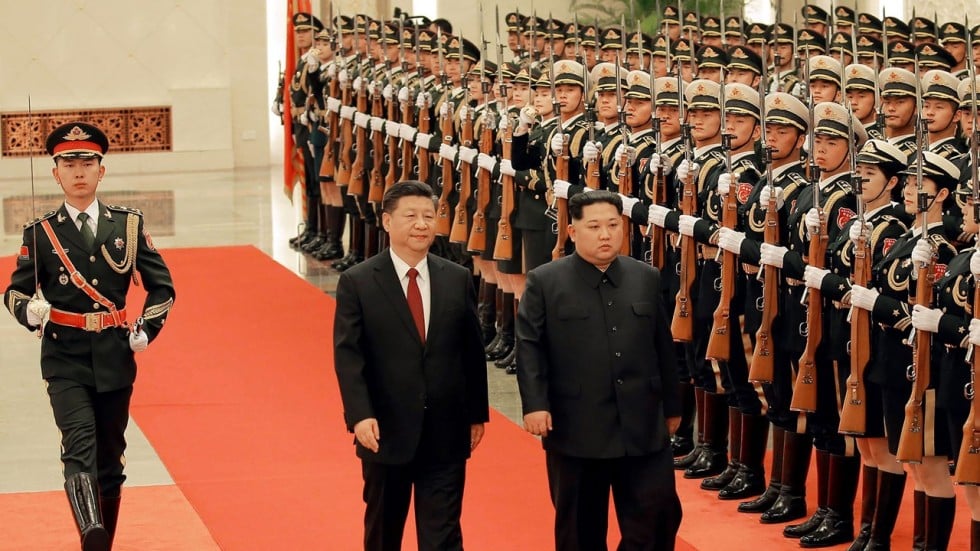
China welcomes the second Kim-Trump summit. Chairman Kim's travel through China from the north to south by train is meaningful. China has played a constructive role in Pyongyang's new routes. Beijing is both a promoter and a stakeholder in this summit.

We hope that the second summit will achieve new breakthroughs. Although the peninsula issues are complex, peace is obviously a good thing. Nothing is impossible to overcome.

Newspaper headline: Kim-Trump summit deserves more support -Source:Global Times

Related:


Trump-Kim summit 2019: Vietnam rolls out red carpet, taking lead from ...


Related posts:

Korean historic Kim-Trump summit begins with handshake in Sinapore, is 'very, very good'


Kim Jong-un says he is ‘committed to Korean denuclearisation’ in Beijing talks


South Korea can’t tackle new Trump Order alone, be prepared new Trump order !


In a tough market, young South Koreans vie for the security of government jobs


2nd Kim-Trump summit in Vietnam deserves more support

https://youtu.be/ofUtSOORUmk
https://youtu.be/_GhgGe7das8
Live: Kim arrives in Vietnam ahead of summit with Trump 第二次特金会 金正恩抵达越南
https://youtu.be/XMTJu1SeLUE North Korea's Kim Jong-un takes train to China - BBC News
https://youtu.be/Zvi4PBdd74Y

Inside train used by Kim Jong-un to travel to China - BBC News
https://youtu.be/_Bcpx6PUpys

Kim Jong-un en route to Vietnam summit by train
https://youtu.be/t4blLDfNrSo

According to media reports, North Korean leader Kim Jong-un left Pyongyang by train for Vietnam on Saturday for his second summit with US President Donald Trump in Hanoi, which reportedly will be held on February 27 and 28.

The upcoming second summit sends positive signals, indicating that Pyongyang and Washington have been moving forward on both denuclearization and permanent peace for the Korean Peninsula since the first summit last June.

Nonetheless, there exist anxieties among certain American and South Korean elites. They worry Trump may make too many concessions and harm Seoul's interests. In their view, the first Kim-Trump summit was a failure and Trump should not repeat the mistake in the upcoming meeting.

North Korea-US relations achieved a major breakthrough since the first summit, providing a new impetus for fundamentally solving the peninsula issue. However, those elites proclaimed that Trump's decision to stop the US-South Korea joint military exercise was a unilateral concession, while North Korea did nothing.

Pyongyang declared it would cease nuclear and missile testing, and dismantle its nuclear test site. According to this logic, did Pyongyang make a unilateral concession?

There is a serious lack of mutual trust between the US and North Korea. Washington requests Pyongyang to abandon nuclear weapons completely, while Pyongyang desires security guarantee and permanent peace on the peninsula. Both sides have been playing the game with their own chips from the outset, making the denuclearization process somewhat fragile.

Nonetheless, denuclearization is not something that can be accomplished in a single action, but through a cumulative process.

There are no more nuclear and missile tests, nor US-South Korea joint military exercises on the Korean Peninsula. Even verbal battles and threats between Washington, Seoul and Pyongyang have faded.

In addition, bilateral meetings between Pyongyang and Washington, and between Pyongyang and Seoul have been constantly taking place.

Both denuclearization and permanent peace on the peninsula are positive targets. From the perspective of the big picture, there is no need to argue which country is moving faster toward the two ultimate goals.

The old thinking must be altered of demanding only the other party take the initiative but using one's own responsibilities as a bargaining chip.

Both Washington and Pyongyang were once extremely tough. Now the peninsula's situation has been finally reversed. Trump has shown the will to move forward, which should be encouraged by both the US and South Korea.

The US partisan struggle should not take the Korean Peninsula issue as a new battlefield. As for concerns among some South Korean people, it is a disturbed way of thinking to worry US-North Korea reconciliation may undermine the US-South Korea alliance.

China welcomes the second Kim-Trump summit. Chairman Kim's travel through China from the north to south by train is meaningful. China has played a constructive role in Pyongyang's new routes. Beijing is both a promoter and a stakeholder in this summit.

We hope that the second summit will achieve new breakthroughs. Although the peninsula issues are complex, peace is obviously a good thing. Nothing is impossible to overcome.

Newspaper headline: Kim-Trump summit deserves more support -Source:Global Times

Related:


Trump-Kim summit 2019: Vietnam rolls out red carpet, taking lead from ...


Related posts:

Korean historic Kim-Trump summit begins with handshake in Sinapore, is 'very, very good'


Kim Jong-un says he is ‘committed to Korean denuclearisation’ in Beijing talks


South Korea can’t tackle new Trump Order alone, be prepared new Trump order !


In a tough market, young South Koreans vie for the security of government jobs


Tuesday, June 12, 2018

Korean historic Kim-Trump summit begins with handshake in Sinapore, is 'very, very good'

https://youtu.be/spyX1T8sG1o
https://youtu.be/acSMJJfF_ag
China Air carried Kim to Singapore talks with Trump
https://youtu.be/V3PbgGb8zIE https://youtu.be/287akUhm8v8

The historic meeting on Tuesday between North Korean leader Kim Jong-un and US President Donald Trump began with a handshake at the Capella hotel, Singapore.

The handshake lasted about 20 seconds before the two leaders walked to the meeting room accompanied by their interpreters.

Trump and Kim sat next to each other and answered a few questions from the media. Trump said he hopes the historic summit would be "tremendously successful,” adding, "We will have a terrific relationship ahead" as he faced Kim.

Kim said there were a number of “obstacles” and “prejudices” which made today’s meeting more difficult. “We overcame all of them and we are here today,” he told reporters through a translator.

Of particular note is the display of the two countries’ flags at the hotel, which is unusual between two countries with no formal diplomatic ties. Observers believe that this is a positive sign.

Trump arrived at the hotel about 8:30am, with Kim arriving five minutes after.

Displaying the national flag of North Korea shows that the US wants to express its sincerity and kindness to North Korea, Cheng Xiaohe, an associate professor at the Renmin University of China's School of International Studies, told the Global Times on Tuesday.

“The move toward establishing formal diplomatic ties could be an achievement of the summit,” Cheng said.

Hundreds of journalists are gathered at the Press Filing Center of the JW Marriott Hotel Singapore, where they can watch the livestream of the historic moment. Dozens of photographers attempted to get closer to Sentosa Island in the morning to film and take photos for the two leaders’ motorcades.

Trump and Kim met alone at 9:15 am and held an expanded bilateral meeting 45 minutes after. At 11:00, the two leaders are scheduled to have a working luncheon. Trump will leave Singapore at 7pm on Tuesday, the White House said.

Trump says summit with North Korea's Kim is 'very, very good'


SINGAPORE: U.S. President Donald Trump said he had forged a "good relationship" with North Korean leader Kim Jong Un at the start of a historic summit in Singapore on Tuesday, as the two men sought ways to end a nuclear standoff on the Korean peninsula.

Should they succeed in making a diplomatic breakthrough, it could bring lasting change to the security landscape of Northeast Asia, like the visit of former U.S. President Richard Nixon to China in 1972 led to the transformation of China.

"There will be challenges ahead," Kim said, but he vowed to work with Trump. Both men sat against in the hotel's library against a backdrop of North Korean and U.S. flags, with Kim beaming broadly as the U.S. president gave him a thumbs up.

With cameras of the world's press trained on them, Trump and Kim displayed an initial atmosphere of bonhomie.

Both men had looked serious as they got out of their limousines for the summit at the Capella hotel on Singapore's Sentosa, a resort island with luxury hotels, a casino, manmade beaches and a Universal Studios theme park.

But they were soon smiling and holding each other by the arm, before Trump guided Kim to the library where they held a meeting with only their interpreters. Trump had said on Saturday he would know within a minute of meeting Kim whether he would reach a deal.

After some initial exchanges lasting around 40 minutes, Trump and Kim emerged, walking side-by-side through the colonnaded hotel before re-entering the meeting room, where they were joined by their most senior officials.

Kim was heard telling Trump through a translator: "I think the entire world is watching this moment. Many people in the world will think of this as a scene from a fantasy...science fiction movie."

Asked by a reporter how the meeting was going, Trump said: "Very good. Very, very good. Good relationship."

Kim also sounded positive about the prospects.

"We overcame all kinds of scepticism and speculations about this summit and I believe that this is good for the peace," he said.

Trump was joined by Secretary of State Mike Pompeo, National Security Adviser John Bolton, and John Kelly, White House Chief of Staff, for the expanded talks, while Kim's team included former military intelligence chief Kim Yong Chol, foreign minister Ri Yong Ho and Ri Su Yong, vice chairman of the ruling Workers' Party.

MARKETS CALM

As the two leaders met, Singapore navy vessels, and air force Apache helicopters patrolled, while fighter jets and an Gulfstream 550 early warning aircraft circled.

Financial markets were largely steady in Asia and did not show any noticeable reaction to the start of the summit. The dollar was at a three-week high and the MSCI index of Asia-Pacific shares was largely unchanged from Monday.

While Trump and Kim search each other’s eyes and words for signs of trust or deceit, the rest of the world will be watching, hoping that somehow these two unpredictable leaders can find a way to defuse one of the planet's most dangerous flashpoints.

A body language expert said both men tried to project command as they met, but also displayed signs of nerves.

In the hours before the summit began, Trump expressed optimism about prospects for the first-ever meeting of sitting U.S. and North Korean leaders, while Pompeo injected a note of caution whether Kim would prove to be sincere about his willingness to denuclearise.

Officials of the two sides held last-minute talks to lay the groundwork for the summit of the old foes, an event almost unthinkable just months ago, when they were exchanging insults and threats that raised fears of war.

Staff-level meetings between the United States and North Korea were going "well and quickly," Trump said in a message on Twitter on Tuesday. But he added: "In the end, that doesn't matter. We will all know soon whether or not a real deal, unlike those of the past, can happen!"

The combatants of the 1950-53 Korean War are technically still at war, as the conflict, in which millions of people died, was concluded only with a truce.

On Tuesday morning, Pompeo fed the mounting anticipation of diplomatic breakthrough, saying: "We're ready for today."

He earlier said the event should set the framework for "the hard work that will follow", insisting that North Korea had to move toward complete, verifiable and irreversible denuclearisation.

North Korea, however, has shown little appetite for surrendering nuclear weapons it considers vital to the survival of Kim's dynastic rule.

Sanctions on North Korea would remain in place until that happened, Pompeo said on Monday. "If diplomacy does not move in the right direction ... those measures will increase."

He added: "North Korea has previously confirmed to us its willingness to denuclearise and we are eager to see if those words prove sincere."

The White House said later that discussions with North Korea had moved "more quickly than expected" and Trump would leave Singapore on Tuesday night after the summit, rather than Wednesday, as scheduled earlier.

Kim is due to leave on Tuesday afternoon, a source involved in the planning of his visit has said.

One of the world's most reclusive leaders, Kim visited Singapore's waterfront on Monday, smiling and waving to onlookers, adding to a more affable image that has emerged since his April summit with South Korean leader Moon Jae-in. 'CHANGED ERA'

Just a few months ago, Kim was an international pariah accused of ordering the killing of his uncle, a half-brother and scores of officials suspected of disloyalty.

The summit was part of a "changed era", North Korea's state-run KCNA news agency said in its first comments on the event.

Talks would focus on "the issue of building a permanent and durable peace-keeping mechanism on the Korean peninsula, the issue of realising the denuclearisation of the Korean peninsula and other issues of mutual concern", it added.

Ahead of the summit, North Korea rejected unilateral nuclear disarmament, and KCNA's reference to denuclearisation of the peninsula has historically meant it wants the United States to remove a "nuclear umbrella" protecting South Korea and Japan.

Trump spoke to both South Korea's Moon and Japan's Prime Minister Shinzo Abe on Monday to discuss developments ahead of the summit.

"I too, got little sleep last night," Moon told his cabinet in Seoul as the summit began in Singapore.

"I truly hope it will be a successful summit that will open a new age for the two Koreas and the United States and bring us complete denuclearisation and peace." - REUTERS


Related:


Kim Jong-un visits China for 3rd time in three months

Chinese President Xi Jinping met North Korean leader Kim Jong-un in Beijing on Tuesday, and the two leaders discussed topics including the US-North Korea summit in Singapore.

Korean historic Kim-Trump summit begins with handshake in Sinapore, is 'very, very good'

https://youtu.be/spyX1T8sG1o
https://youtu.be/acSMJJfF_ag
China Air carried Kim to Singapore talks with Trump
https://youtu.be/V3PbgGb8zIE https://youtu.be/287akUhm8v8

The historic meeting on Tuesday between North Korean leader Kim Jong-un and US President Donald Trump began with a handshake at the Capella hotel, Singapore.

The handshake lasted about 20 seconds before the two leaders walked to the meeting room accompanied by their interpreters.

Trump and Kim sat next to each other and answered a few questions from the media. Trump said he hopes the historic summit would be "tremendously successful,” adding, "We will have a terrific relationship ahead" as he faced Kim.

Kim said there were a number of “obstacles” and “prejudices” which made today’s meeting more difficult. “We overcame all of them and we are here today,” he told reporters through a translator.

Of particular note is the display of the two countries’ flags at the hotel, which is unusual between two countries with no formal diplomatic ties. Observers believe that this is a positive sign.

Trump arrived at the hotel about 8:30am, with Kim arriving five minutes after.

Displaying the national flag of North Korea shows that the US wants to express its sincerity and kindness to North Korea, Cheng Xiaohe, an associate professor at the Renmin University of China's School of International Studies, told the Global Times on Tuesday.

“The move toward establishing formal diplomatic ties could be an achievement of the summit,” Cheng said.

Hundreds of journalists are gathered at the Press Filing Center of the JW Marriott Hotel Singapore, where they can watch the livestream of the historic moment. Dozens of photographers attempted to get closer to Sentosa Island in the morning to film and take photos for the two leaders’ motorcades.

Trump and Kim met alone at 9:15 am and held an expanded bilateral meeting 45 minutes after. At 11:00, the two leaders are scheduled to have a working luncheon. Trump will leave Singapore at 7pm on Tuesday, the White House said.

Trump says summit with North Korea's Kim is 'very, very good'


SINGAPORE: U.S. President Donald Trump said he had forged a "good relationship" with North Korean leader Kim Jong Un at the start of a historic summit in Singapore on Tuesday, as the two men sought ways to end a nuclear standoff on the Korean peninsula.

Should they succeed in making a diplomatic breakthrough, it could bring lasting change to the security landscape of Northeast Asia, like the visit of former U.S. President Richard Nixon to China in 1972 led to the transformation of China.

"There will be challenges ahead," Kim said, but he vowed to work with Trump. Both men sat against in the hotel's library against a backdrop of North Korean and U.S. flags, with Kim beaming broadly as the U.S. president gave him a thumbs up.

With cameras of the world's press trained on them, Trump and Kim displayed an initial atmosphere of bonhomie.

Both men had looked serious as they got out of their limousines for the summit at the Capella hotel on Singapore's Sentosa, a resort island with luxury hotels, a casino, manmade beaches and a Universal Studios theme park.

But they were soon smiling and holding each other by the arm, before Trump guided Kim to the library where they held a meeting with only their interpreters. Trump had said on Saturday he would know within a minute of meeting Kim whether he would reach a deal.

After some initial exchanges lasting around 40 minutes, Trump and Kim emerged, walking side-by-side through the colonnaded hotel before re-entering the meeting room, where they were joined by their most senior officials.

Kim was heard telling Trump through a translator: "I think the entire world is watching this moment. Many people in the world will think of this as a scene from a fantasy...science fiction movie."

Asked by a reporter how the meeting was going, Trump said: "Very good. Very, very good. Good relationship."

Kim also sounded positive about the prospects.

"We overcame all kinds of scepticism and speculations about this summit and I believe that this is good for the peace," he said.

Trump was joined by Secretary of State Mike Pompeo, National Security Adviser John Bolton, and John Kelly, White House Chief of Staff, for the expanded talks, while Kim's team included former military intelligence chief Kim Yong Chol, foreign minister Ri Yong Ho and Ri Su Yong, vice chairman of the ruling Workers' Party.

MARKETS CALM

As the two leaders met, Singapore navy vessels, and air force Apache helicopters patrolled, while fighter jets and an Gulfstream 550 early warning aircraft circled.

Financial markets were largely steady in Asia and did not show any noticeable reaction to the start of the summit. The dollar was at a three-week high and the MSCI index of Asia-Pacific shares was largely unchanged from Monday.

While Trump and Kim search each other’s eyes and words for signs of trust or deceit, the rest of the world will be watching, hoping that somehow these two unpredictable leaders can find a way to defuse one of the planet's most dangerous flashpoints.

A body language expert said both men tried to project command as they met, but also displayed signs of nerves.

In the hours before the summit began, Trump expressed optimism about prospects for the first-ever meeting of sitting U.S. and North Korean leaders, while Pompeo injected a note of caution whether Kim would prove to be sincere about his willingness to denuclearise.

Officials of the two sides held last-minute talks to lay the groundwork for the summit of the old foes, an event almost unthinkable just months ago, when they were exchanging insults and threats that raised fears of war.

Staff-level meetings between the United States and North Korea were going "well and quickly," Trump said in a message on Twitter on Tuesday. But he added: "In the end, that doesn't matter. We will all know soon whether or not a real deal, unlike those of the past, can happen!"

The combatants of the 1950-53 Korean War are technically still at war, as the conflict, in which millions of people died, was concluded only with a truce.

On Tuesday morning, Pompeo fed the mounting anticipation of diplomatic breakthrough, saying: "We're ready for today."

He earlier said the event should set the framework for "the hard work that will follow", insisting that North Korea had to move toward complete, verifiable and irreversible denuclearisation.

North Korea, however, has shown little appetite for surrendering nuclear weapons it considers vital to the survival of Kim's dynastic rule.

Sanctions on North Korea would remain in place until that happened, Pompeo said on Monday. "If diplomacy does not move in the right direction ... those measures will increase."

He added: "North Korea has previously confirmed to us its willingness to denuclearise and we are eager to see if those words prove sincere."

The White House said later that discussions with North Korea had moved "more quickly than expected" and Trump would leave Singapore on Tuesday night after the summit, rather than Wednesday, as scheduled earlier.

Kim is due to leave on Tuesday afternoon, a source involved in the planning of his visit has said.

One of the world's most reclusive leaders, Kim visited Singapore's waterfront on Monday, smiling and waving to onlookers, adding to a more affable image that has emerged since his April summit with South Korean leader Moon Jae-in. 'CHANGED ERA'

Just a few months ago, Kim was an international pariah accused of ordering the killing of his uncle, a half-brother and scores of officials suspected of disloyalty.

The summit was part of a "changed era", North Korea's state-run KCNA news agency said in its first comments on the event.

Talks would focus on "the issue of building a permanent and durable peace-keeping mechanism on the Korean peninsula, the issue of realising the denuclearisation of the Korean peninsula and other issues of mutual concern", it added.

Ahead of the summit, North Korea rejected unilateral nuclear disarmament, and KCNA's reference to denuclearisation of the peninsula has historically meant it wants the United States to remove a "nuclear umbrella" protecting South Korea and Japan.

Trump spoke to both South Korea's Moon and Japan's Prime Minister Shinzo Abe on Monday to discuss developments ahead of the summit.

"I too, got little sleep last night," Moon told his cabinet in Seoul as the summit began in Singapore.

"I truly hope it will be a successful summit that will open a new age for the two Koreas and the United States and bring us complete denuclearisation and peace." - REUTERS

Related:

Kim Jong-un visits China for 3rd time in three months

Chinese President Xi Jinping met North Korean leader Kim Jong-un in Beijing on Tuesday, and the two leaders discussed topics including the US-North Korea summit in Singapore.

Thursday, November 3, 2016

We need to come out against a third world war

https://youtu.be/EpF0U7lUVdk

IS A WAR in the making – a third world war? If there is much talk about such a possibility, it is mainly because of the tensions between the United States and Russia.

Tensions between the two most powerful nuclear states in the world have never been this high since the end of the Cold War in 1989 and the demise of the Soviet Union in 1991.

There are at least two flash points, one more dangerous than the other. In Eastern Ukraine, Russian backed rebels will not surrender to the US supported regime in Kiev because they see US control over Ukraine as part of a much larger agenda to expand Nato power to the very borders of Russia. This has been happening for some years now.

But it is the Washington-Moscow confrontation in Allepo, Syria which portends to a huge conflagration. The US is protective of major militant groups such as Al-Nusra which has besieged Eastern Allepo and is seeking to overthrow the Bashar al-Assad government.

Washington has also set its sight on "regime change" in Damascus ever since the latter's determined resistance to Israeli occupation of the strategic Golan Heights in Syria from 1967.

The drive for regime change intensified with the US-Israeli quest for a "new Middle East" following the Anglo-American invasion and occupation of Iraq in 2003. It became more pronounced in 2009 when Bashar al-Assad rejected a proposal to allow a gas pipe-line from Qatar to Europe to pass through his country, a pipe-line which would have reduced Europe's dependence upon Russia for gas.

Russia of course has been a long-standing ally of Syria. Together with Iran and the Lebanese Hezbollah, it is helping the Syrian government to break the siege of Eastern Allepo and to defeat militants in other parts of Syria.

It is obvious that in both instances, in Ukraine and Syria, the US has not been able to achieve what it wants. The US has also been stymied in Southeast Asia where its attempt to re-assert its power through its 2010 Pivot to Asia policy has suffered a serious setback as a result of the decision of the new president of the Philippines, Rodrigo Duterte, to pursue an independent foreign policy that no longer adheres blindly to US interests.

At the same time, China continues to expand and enhance its economic strength in Asia and the world through its One Belt One Road projects and the Asia Infrastructure Investment Bank and via its leadership of BRICS.

China's regional and global economic role is leading to its pronounced presence in security and military matters. As a result of all this, the US's imperial power has clearly diminished. It is a hegemon in decline.

It is because it is not prepared to accept its decline that some US generals are threatening to demonstrate US's military might. If a hegemon is a danger to humankind when it is at its pinnacle, it becomes an even greater threat to peace when its power is diminishing.

Like a wounded tiger, it becomes even more furious and ferocious. A new US president may be inclined to give vent to this frustration through an arrogant display of military power.

How can we check such wanton arrogance? There will be elements in the elite stratum of US society itself who would be opposed to the US going to war.

We saw a bit of this in 2013 when those who were itching to launch military strikes against Syria based upon dubious "evidence" of the government's use of chemical weapons were thwarted by others with a saner view of the consequences of war. It is also important to observe that none of the US's major allies in Europe wants a war.

Burdened by severe challenges related to the economy and migration, the governments know that their citizens will reject any move towards war either on the borders of Russia or in Syria and West Asia.

This also suggests that a self-absorbed European citizenry may not have the enthusiasm to mobilise against an imminent war. Let us not forget that it was in European cities from London to Berlin that the biggest demonstrations against the war in Iraq took place in 2003.

Anti-war protests will have to be initiated elsewhere this time.

Governments in Moscow and Beijing, in Teheran and Jakarta, in Pretoria and La Paz, should come out openly against war. They should encourage other governments in the Global South and the Global North to denounce any move towards a war that will engulf the whole of humanity.

Citizens all over the world should condemn war through a variety of strategies ranging from signature campaigns and letters to the media to public rallies and street demonstrations.

In this campaign against an imminent war, the media, both conventional and alternative, will have a huge role to play.

It is unfortunate that well-known media outlets in the West have supported war in the past. It is time that they atone for their sins!

By Chandra Muzaffar

Dr Chandra Muzaffar is the president of the International Movement for a Just World (JUST). Comments: letters@thesundaily.com

Related articles
https://youtu.be/5iWUSTPeKQA J-20 stealth fighter makes public debut The 11th China International Aviation & Aerospace Exhibi...

 
World doubts the leadership of Uncle Sam: expert
The culture of guns As the US has lost more international status and influence since the global financial crisis in 2008, the inter...


 Philippine President Duterte in China for "Historic" Visit ; US Media Churlish!
  Philippine President Rodrigo Duterte arrives in Beijing on October 18, 2016, beginning his state visit to China. [Photo: Chinanews.co..