18-hole golf course, boasting rolling fairways and manicured greens. The course featuring Bermuda grass on fairways and tee boxes and Tif Dwarf greens, offers ...
AI Overview
Green fees for Penang Golf Club (located in Bayan Lepas, the sole championship 18-hole golf course on Penang Island) typically range starting from MYR 305+ for standard packages, while partner or aggregator rates can vary. [1, 2, 3]
https://penanggolfclub.com.my/
About Us
Penang Golf Club
Discover Penang Golf Club, the island’s sole championship 18-hole golf course, boasting rolling fairways and manicured greens. The course, featuring Bermuda grass on fairways and tee boxes and Tif Dwarf greens, offers fast and exhilarating golfing experiences.
Golfers on the course enjoy breathtaking panoramic views of Penang, including its iconic bridges. Surrounded by lush greenery, hills, and the sounds of chirping birds, the course provides a nature-immersed atmosphere. Tropical flora, including palm, durian, angsana, pineapple, tecoma, pandan, and coconut trees, add a local touch.
With strategic sand bunkers, water hazards, and challenging fairways, the 5,848 meter par 72 course demands careful club selection and precise stance. Notably, Penang Golf Club hosted the 31st Malaysian Open in 1992 won by Mr. Vijay Singh.
The club, recognized for its excellent maintenance, hosts professional tournaments and welcomes players from around the world. In addition to the golf course, there’s a 32-bay, two-tier driving range and a practice putting green. Professional lessons, with Japanese and local staff, are available for those eager to take up the game.
We aim to attract enthusiasts worldwide by emphasizing quality, sustainability, and delivering an unparalleled golfing experience, striving to symbolize excellence in the golfing community.
Our Mission
Committed to quality, sustainability, and an unmatched golfing experience we aim to symbolize excellence in the golfing community.
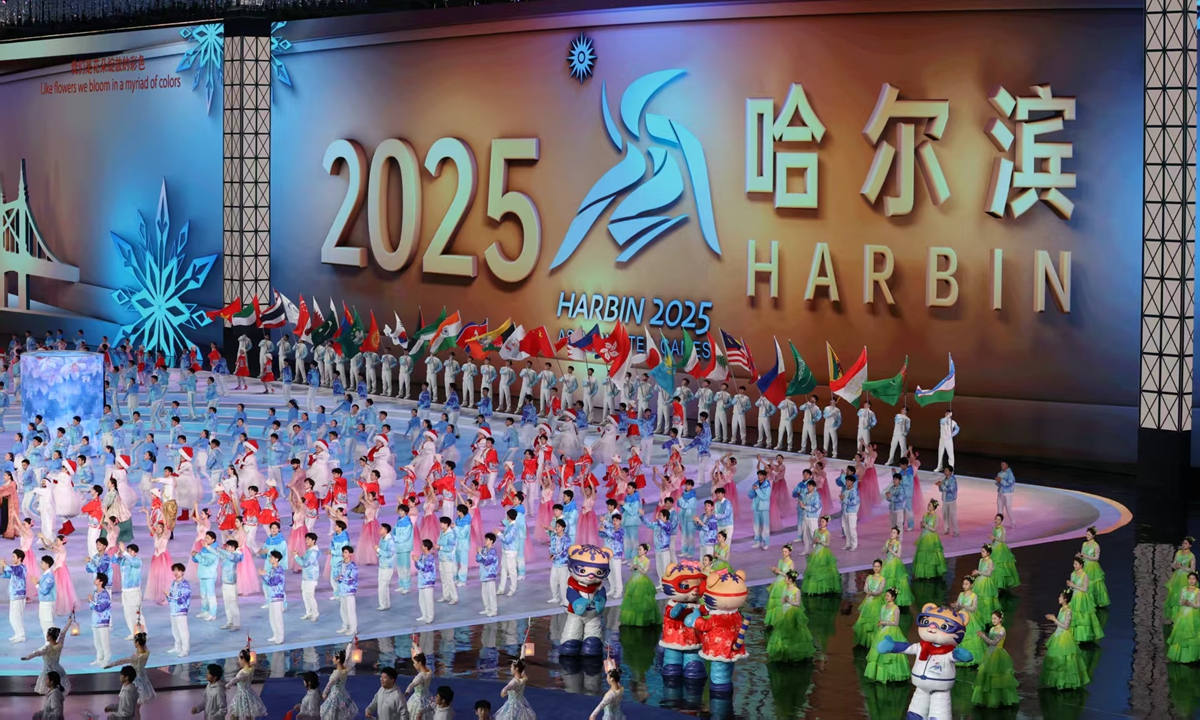
Artists perform during the closing ceremony of the 9th Asian Winter Games in Harbin, Northeast China's Heilongjiang Province on February 14, 2025. Photo: Chen Tao/GT
Northeast China's Harbin drew a close to the 9th Asian Winter Games on Friday night with a spectacular ceremony. Observers believe that the week-long ice and snow gala not only showcases the vitality of Asian ice and snow sports development, but also conveys the shared aspiration of Asian unity and common prosperity.
Escorted by mascots Binbin and Nini, participating delegations entered the Harbin International Conference, Exhibition and Sports Center together, sharing the long-lasting cheers and applauds from audiences at the closing ceremony. Many of the athletes held hands with each other and danced with the mascots to the music, with heartfelt smile on their faces.
In addition to the snow and ice themed artistic performances, the unforgettable moments filled with laughter and tears were also made into short films shown at the closing ceremony.
Timothy Fok Tsun-ting, first vice president of the Olympic Council of Asia (OCA), declared the 9th Asian Winter Games closed. The 2029 Asian Winter Games will be held in Trojena, Saudi Arabia, marking the first time the event is hosted in West Asia.
China topped the medal tally with 32 gold, 27 silver, and 26 bronze medals, followed by South Korea with 16 gold, 15 silver, and 14 bronze medals. Japan ranked third with 10 gold, 12 silver, and 15 bronze medals.
Asian Winter Games Harbin 2025 medal table: All medals - full list
China tied the record for the most gold medals set by Kazakhstan at the 7th Asian Winter Games in Astana-Almaty in 2011, according to Xinhua.
Running from February 7 to 14 in Northeast China's Heilongjiang Province, under the theme "Dream of Winter, Love among Asia," the Games featured over 1200 athletes from 34 countries and regions competing in 64 events across 11 disciplines, making it the largest edition of the Asian Winter Games in history. Notably, Cambodia and Saudi Arabia made their debuts at the Games.
Premier of the State Council Li Qiang on Friday attended the Closing Ceremony of the Ninth Asian Winter Games in Harbin, and held a welcoming banquet and bilateral events for foreign leaders attending the event, including Mongolian Prime Minister Oyun-Erdene Luvsannamsrai and Prime Minister Mark Brown of the Cook Islands.
Chinese Foreign Ministry spokesperson Guo Jiakun said at a press briefing Friday that despite the conclusion of Games, the inspiration of "Dream of Winter, Love among Asia" will not end and the shared aspiration and pursuit for peace, development and friendship will continue.
"At this Asian Winter Games, athletes have competed while showing mutual respect and cheering for each other, telling a story of sports for peace, unity and inclusiveness," Guo said.
More than 1,200 athletes from 34 countries and regions have gathered in Harbin, which marks the expansion of the big family of Asian winter sports and underlines the prevailing trend of solidarity and friendship in Asia, he said.
"China stands ready to work with other Asian countries and the international community to continuously move forward the international Olympic cause and make greater contributions to the building of a community with a shared future for mankind," Guo said.
Setting benchmark
During a press briefing on Friday, Husain Al Musallam, director general of the OCA, noted that the Harbin Asian Winter Games has set a benchmark for major multi-sport events in Asia.
"Our athletes enjoy competing here and wish to come back to Harbin. The rest of the world came here and witnessed how Harbin managed to organize such a big event in 18 months with not only successful facilities but also the details for everybody," he said, per Xinhua.
Vinod Kumar Tiwari, deputy director general of the OCA, told the Global Times that Harbin 2025 is "a miracle on ice and snow."
While many attendees were impressed by China's eco-friendly and cutting-edge technologies, such as the use of green and renewable power and material during Harbin 2025, some Asian countries were more focused on the diplomatic significance of the grand sport event.
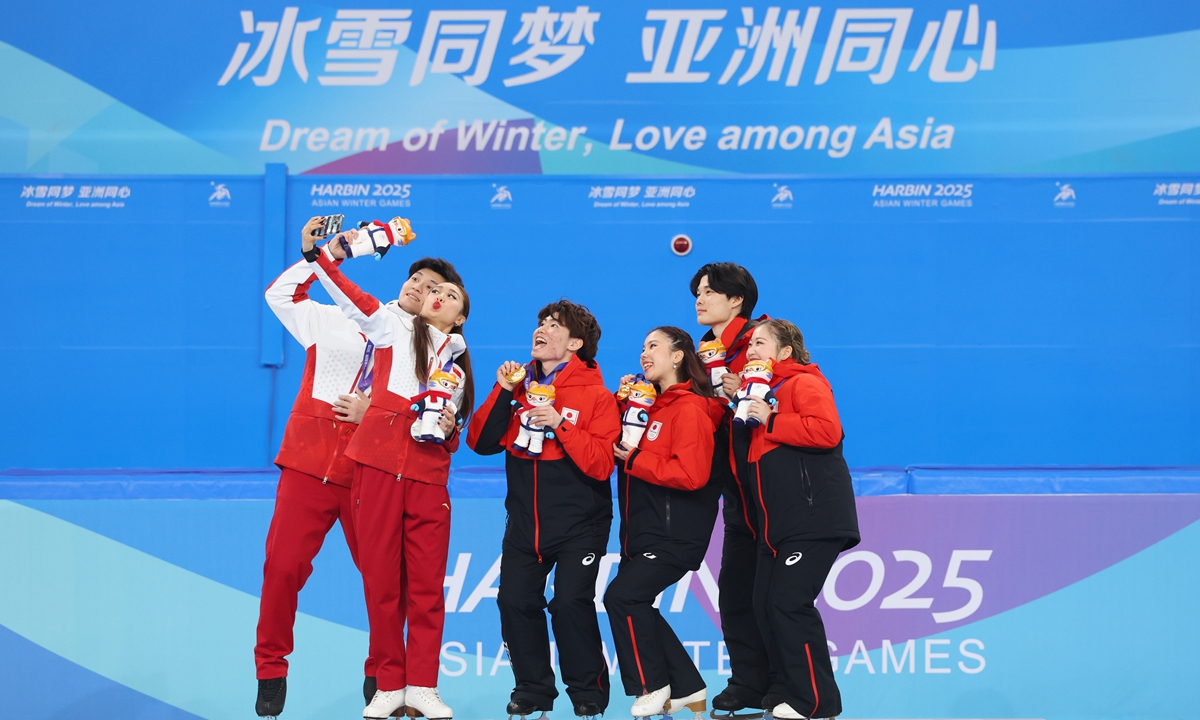
In an article released on Wednesday, the Daily Parliament Times from Pakistan described the 2025 Asian Winter Games as "a celebration of Asia's unity and friendship." Citing the handshake between Chinese athlete Han Yu and Philippine athlete Kathleen Sumbillo Dubberstein, the media outlet remarked that the sports events "offer a platform for cultural exchange and mutual respect."
Likewise, His Highness Shaikh Isa bin Ali Al Khalifa, who is also the Vice President of the Bahrain Olympic Committee, highlighted the significance of the Asian Winter Games in "fostering connections among athletes across Asia," according to a report from Bahrain News Agency.
Engr Qaiser Nawab, the Global Climate Youth Activist and Chairman of the Belt and Road Initiative for Sustainable Development, said in an article published in the Pakistan Observers that Harbin 2025 has "fostered unity, with participants and spectators experiencing a sense of global solidarity that transcended geopolitical boundaries."
The Asian Winter Games are not only a stage for benign competition based on mutual respect, but also a platform for athletes from different countries to enhance people-to-people exchange and friendship, said Shang Ximeng, a research fellow at the Center for International Sport Communication and Diplomacy Studies, Beijing Foreign Studies University.
The warmth and friendliness of the Harbin people and the service staff also showcased the positive image of China, she said.
New chapter
Despite that the Harbin Games concluded on Friday, the stories of Harbin's transition and the growth of China's ice and snow economy may mark the start of a new chapter. Harbin, once a heavy industry base in China's "rustbelt," has become more popular as an "ice city" with the hosting of two Asian Winter Games and the rise of its ice and snow economy.
On February 7, President Xi Jinping addressed the welcome banquet ahead of the Harbin 2025 opening, saying that the ice-and-snow fervor and related economy are becoming new engines of Harbin's high-quality development and new pathways of its opening up, according to Xinhua.
"We feel truly in here [Harbin] that ice and snow are as valuable as gold and silver," Xi said.
During the 2024-2025 winter season, the number of visitors engaging in ice and snow leisure tourism in China is projected to reach 520 million, with tourism revenue anticipated to surpass 630 billion yuan ($86 billion), according to China's Ice and Snow Tourism Development Report (2025) published on January 5 by the China Tourism Academy.
China aims to boost its ice-and-snow economy, targeting an economic scale of 1.2 trillion yuan ($167.34 billion) by 2027 and 1.5 trillion yuan by 2030, according to guidelines released by the State Council last year.
During China's eight-day Spring Festival holiday, Harbin received more than 12 million visits, marking a 20.4 percent year-on-year increase, according to Xinhua.
"Looking ahead, we look forward to working together with our friends to promote the continuous development of winter sports in Asia, advancing with determination and always moving forward, contributing more Chinese strength to the prosperity and development of winter sports, and building a beautiful vision for a shared future of humanity," Zhang Haihua, deputy secretary-general of the organizing committee and vice mayor of Harbin said at a press conference on Friday.
Harbin is no longer just a destination for winter tourism, but has become a model for the mutual promotion and integration of sports, culture, tourism, and social sustainable development, said Ru Xiuying, director of the Olympic Research Center of Capital University of Physical Education and Sports.
As the ice and snow economy has increasingly become a booster for China's overall economic and social development, the story of Harbin also provides an example for other countries to learn from, she noted.
The fact that countries such as Saudi Arabia and Cambodia sent teams for the first time to the Asian Winter Games shows that the scope of participation in ice and snow sports in Asia is expanding beyond high-latitude countries, which is also strong proof of mutual assistance of resources and coordinated development in the ice and snow sports industry among Asia, Shang said.
The 9th Asian Winter Games officially concluded in Harbin, the capital of Northeast China's Heilongjiang Province, on Friday. This grand event marks yet another major ice and snow celebration in China following the Beijing 2022 Winter
Asian Winter Games Harbin 2025 medal table: All medals - full list
Rank
Team/NOC
Total
1
People's Republic of China
21
2
Republic of Korea
19
3
Japan
7
4
Kazakhstan
3
Chinese President Xi Jinping opened the 9th Asian Winter Games in Harbin on Friday night during a festive ceremony highlighting the city's ice and snow culture.
Over 8,000 spectators at the Harbin International Conference, Exhibition and Sports Center burst into cheers as Xi officially declared the Games open in the presence of visiting dignitaries including International Olympic Committee (IOC) President Thomas Bach.
The opening ceremony reached its climax as four torchbearers - two-time Olympic champion and short track speed skater Yang Yang, China's first male Winter Olympic gold medalist and freestyle skier Han Xiaopeng, Olympic race walk champion Wang Zhen, and Sochi Winter Olympics speed skating champion Zhang Hong - joined by children holding ice lanterns, lit the lilac-shaped cauldron at opening ceremony's sub-venue, Harbin Ice and Snow World, the world's largest ice and snow theme park.
Running from February 7 to 14, the Harbin Games, with the slogan "Dream of Winter, Love among Asia" represents another major international winter sports event hosted by China following the Beijing Winter Olympics in 2022. It also marks the country's third time hosting the Asian Winter Games, following Harbin 1996 and Changchun 2007.
A record 34 countries and regions are competing in Harbin 2025, surpassing the previous high set at the 8th Asian Winter Games in Sapporo, Japan in 2017. Over 1,200 athletes are participating in ice events in Harbin and snow events in Yabuli, marking an increase from the previous record of 1,147 at the Sapporo Games.
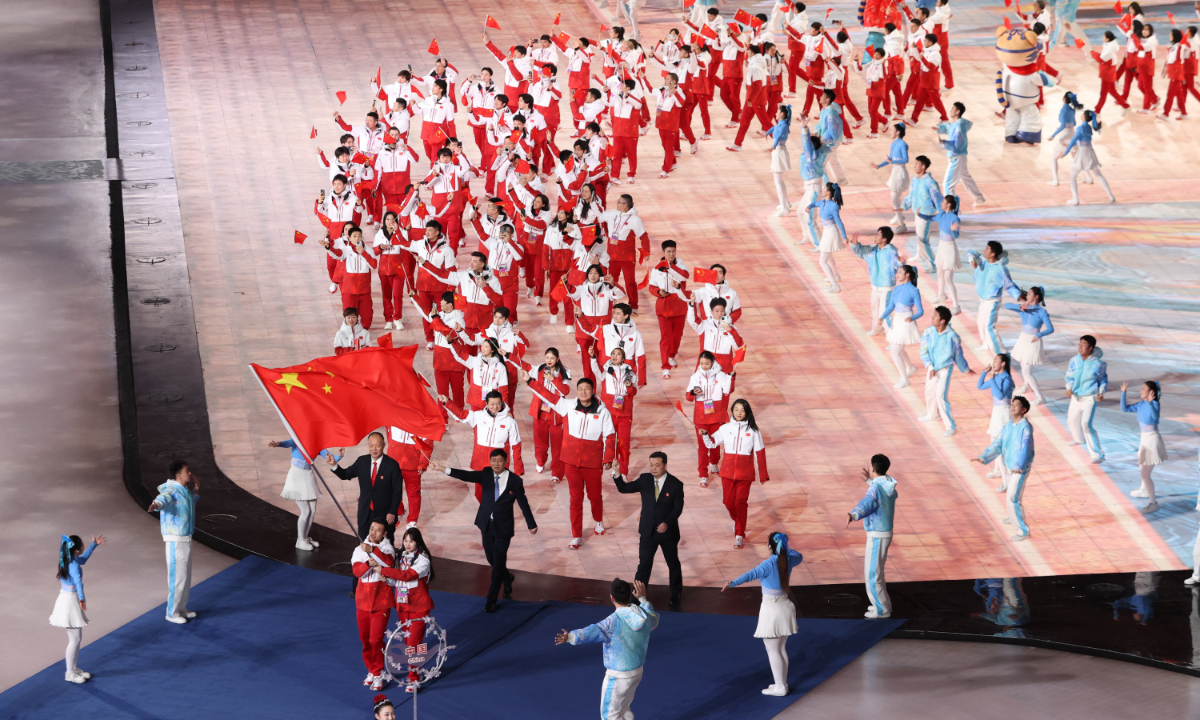
Amid roaring cheers from the venue audience, star speed skater Ning Zhongyan and skier Liu Mengting, who made history by winning the women's big air gold at the FIS Freeski World Cup in January, bore the Chinese national flag during the athletes' parade.
The Chinese delegation is composed of 257 members, including 170 athletes. Five Beijing 2022 Winter Olympic champions, Xu Mengtao, Qi Guangpu, Gao Tingyu, Fan Kexin and Liu Shaoang headline the squad of 85 men and 85 women that cover 64 events across six disciplines.
The Harbin Asian Winter Games, using ice and snow as a medium, will build a bridge for mutual learning among civilizations, witnessing another "mutual journey" for deepening exchanges and enhancing friendship between the people of China and the world.
Bullet trains specially designed for icy conditions and cranberries that are being cultivated in space are some of the highlights of "Made in Northeast China" products that are serving the 9th Asian Winter Games.